
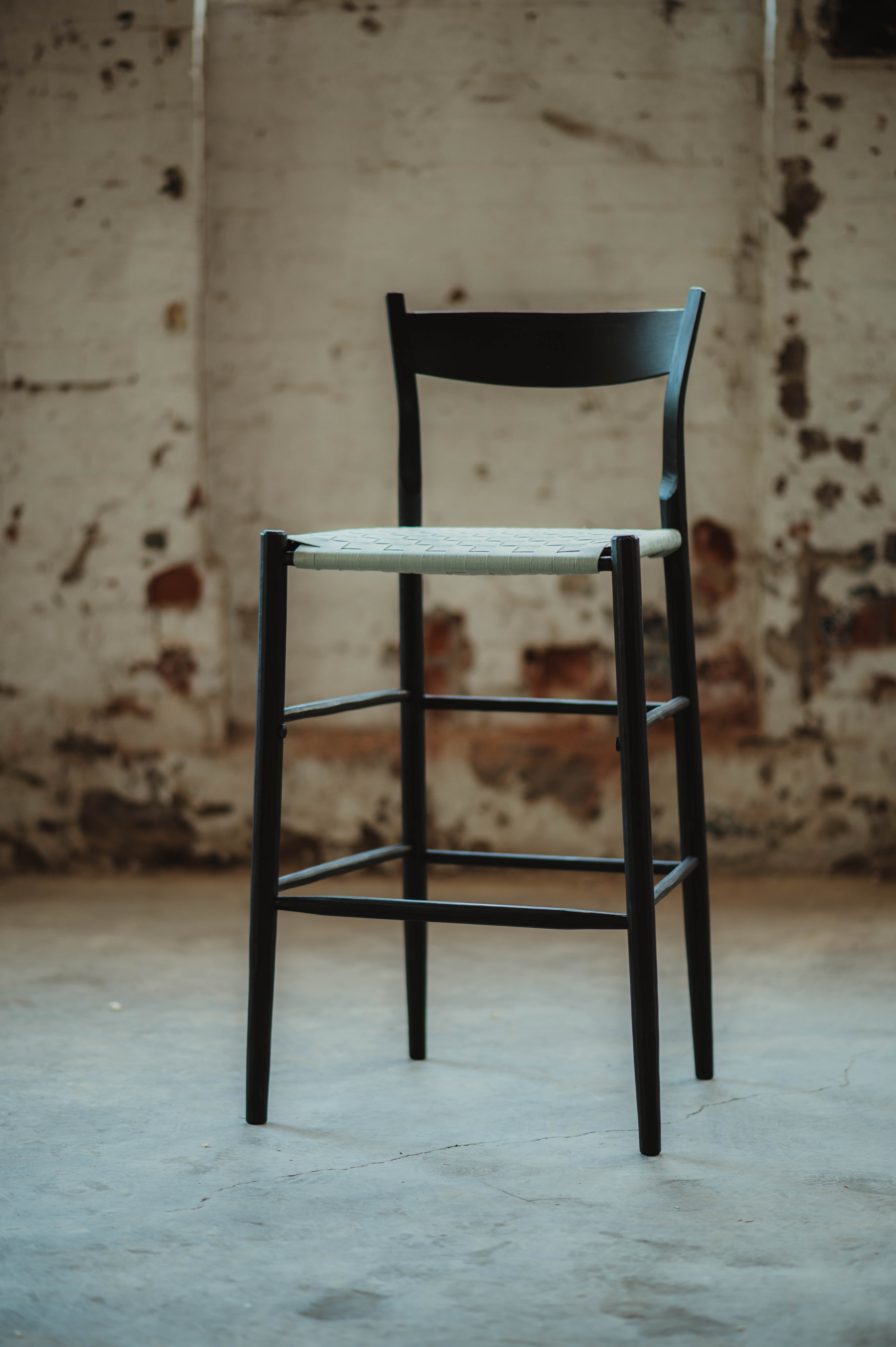
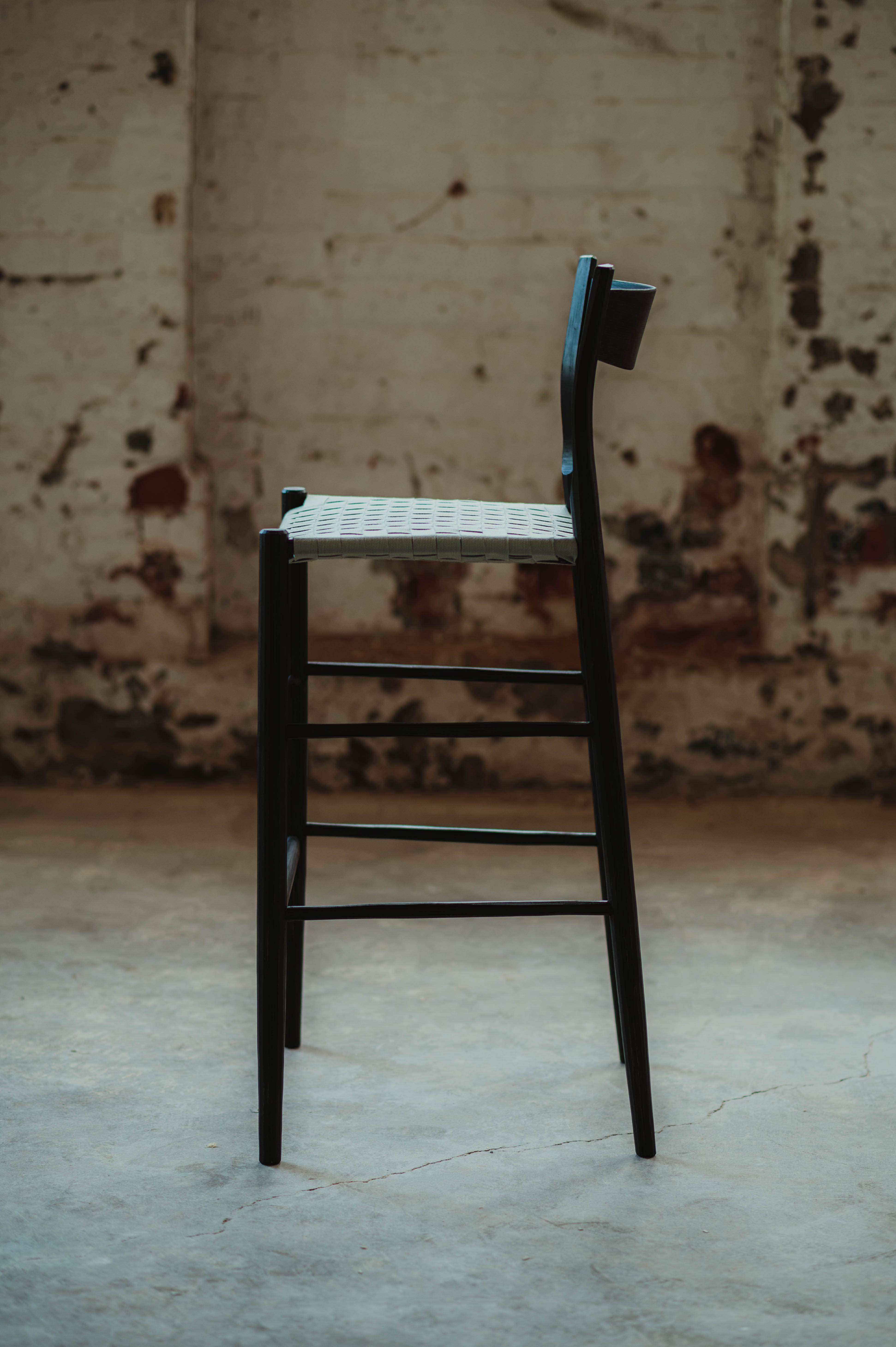

These chairs are white oak, painted with black over gray milk paint. The seat is gray shaker tape. It’s a counter height design that I’ve been working on, more comfortable than a stool and very easy to move around.

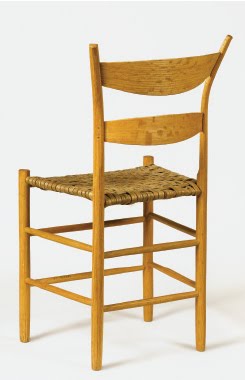
Photo’s from JA’s website www.greenwoodworking.com
Post and rung chairs date back ages, but my jumping off point in terms of design comes from the iconic Jennie Alexander chair (JA chair or simply Jennie chair). Alexander spent years studying the construction of chairs in the historical record, finding important elements that otherwise may have been lost in the wake of furniture industrialization. Based on her findings she developed a settin’ chair that is comfortable, lightweight, and robust. The construction starts with unseasoned “green” wood, so the process is novel for modern craftspeople but is not complicated. Alexander shares her design and how to build it in the book Make a Chair from a Tree.
Many chair makers that I admire have an interpretation of this chair that better suits their style of working and the wants/needs of their customers. Together their chairs are like an array of alternate universe comic book characters, quite different from one another but their links to Alexander’s chair are definitive.
This chair was constrained by height. Stretching the posts out to fit at a counter would make it an intimidating tower of a chair that probably wouldn’t be stable on the floor. To keep it approachable I went with a single back slat, high backs mostly come into play when you’re able to stretch your legs out in front of you (something that you don’t do as much when your feet aren’t touching the floor). Adding stability by widening the stance of the chair was an easy design change, but added angles and a lot of different rung lengths into the build process—I think the extra effort payed off in the end.
Other elements are left the same. Post and rung diameters are the same. The slats are from Alexander’s pattern. The back posts are even bent using the same bending form, though they are longer and the the relieved portions are shorter.
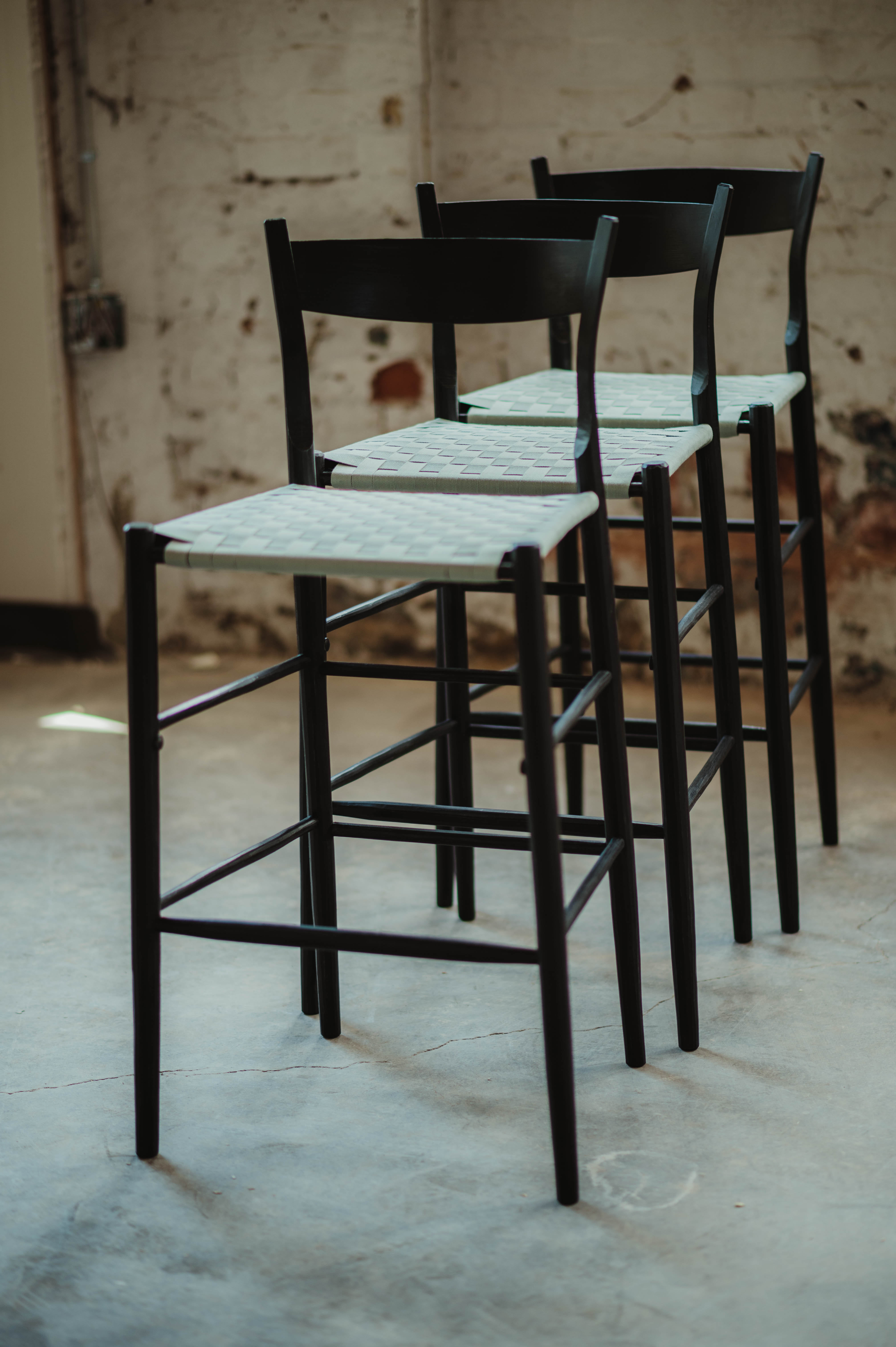
I left the components with facets and tried to embrace the subtle inconsistency of the oak, if the tree had a lump so does the rung that came from that section. The contrast of light on the black paint shows lines meandering along the sticks. It looks at home next to the salvaged 19th century door and window trim in the room they now live in.
As with any build the finished piece is infinitely more informative than an idea or a drawing. In the next round I will tweak some details, like the foot rest which I’d like to feel more developed than just a chubby rung.
With the way my schedule is shaking out it’ll be a few months before I am able to make more of these, but I won’t be slowing down on chairs. I bent some spare posts when I made these three, which I’ll cut down to use in a true Jennie chair. Then some dining chairs and windsor stuff…

 Just James